
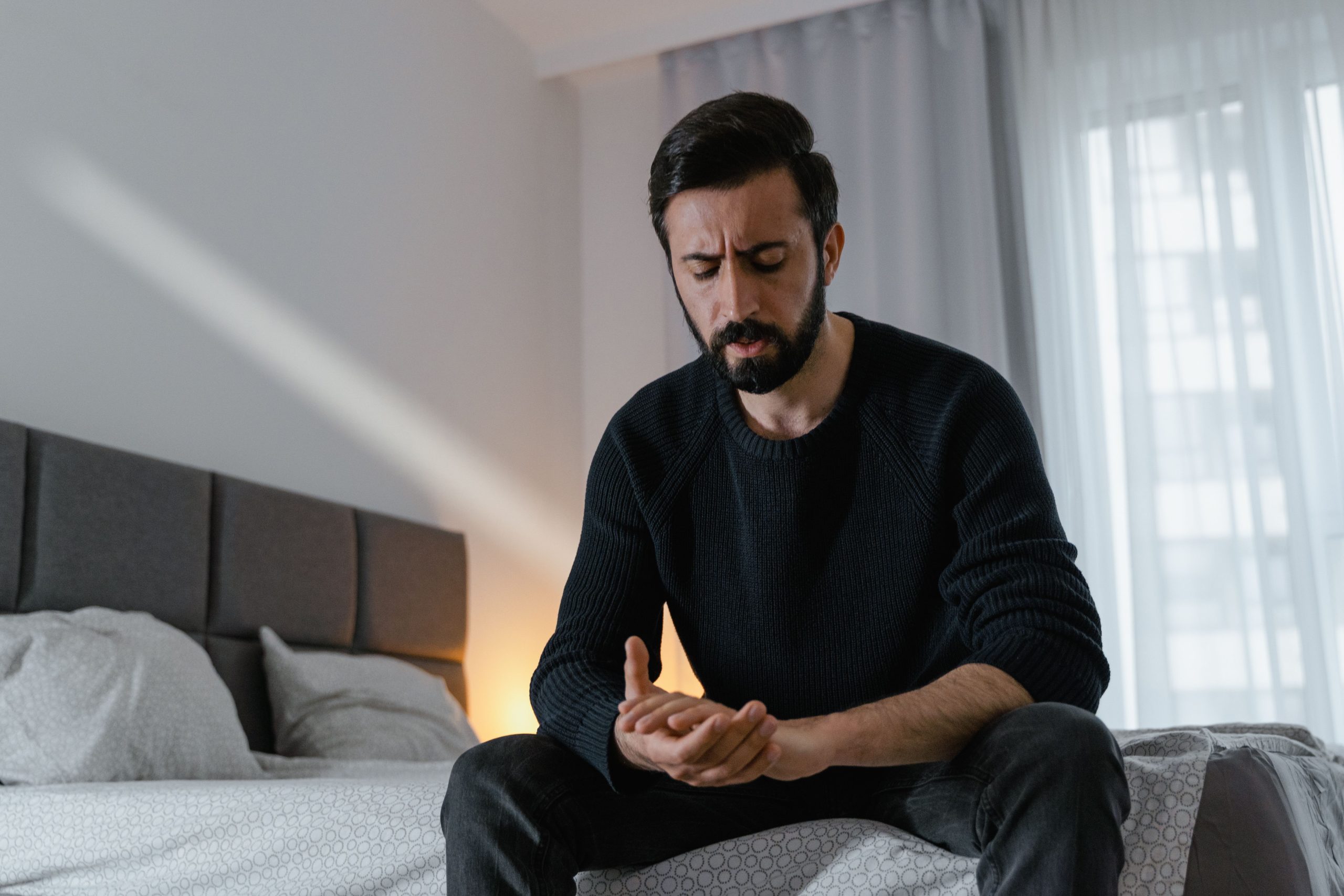
Sexual difficulties can feel intensely personal, but they are not a verdict on masculinity, attraction, or the future of a relationship. Stress and anxiety can interfere with sexual response in several ways, from reducing desire to making erections less reliable. And once a difficult experience creates fear about the next one, worry itself can become part of the problem.
That does not mean every sexual change is psychological. Physical health, medication, sleep, alcohol, and relationship circumstances can all matter. The useful approach is to notice patterns without self-diagnosing, reduce avoidable pressure, and get medical advice when a problem keeps returning.
How stress gets into the bedroom

Sexual arousal is not a switch that can be forced on by willpower. It involves attention, emotion, nerves, blood flow, hormones, and the context in which intimacy happens. When someone is under pressure, preoccupied, or bracing for a problem, it can be harder to stay engaged with pleasurable sensations and respond as usual.
An erection may become less predictable; desire may fade; orgasm or ejaculation may happen sooner or later than expected. Stress outside sex can contribute too: financial strain, caregiving, conflict, work deadlines, or persistent poor sleep may leave little mental room for intimacy.
A common trap is performance monitoring: checking repeatedly whether an erection is firm enough, whether it will last, or whether a partner is disappointed. That shifts attention from shared experience to evaluation. If an erection changes, trying harder to control it can intensify the pressure rather than resolve it.
It can affect more than erections
Men often use erectile function as the only measure of sexual health, but anxiety can affect the whole experience. It may dampen libido, make touch feel less enjoyable, interrupt concentration, or make it difficult to reach orgasm. Some men avoid initiating sex because they fear another uncomfortable or disappointing encounter.
These changes can be temporary and situational, but frequency and context are worth noticing. The NHS notes that occasional erection difficulties can happen with stress, tiredness, or alcohol; if problems keep happening, it recommends seeing a GP because an underlying condition may need attention. That is a sensible distinction: one difficult night is not a diagnosis, while a persistent change deserves a proper look.
When worry becomes a relationship issue

Partners can misread a sexual change as rejection, loss of attraction, or lack of effort. The man experiencing it may then feel pressure to reassure the other person by “making it work,” which can turn intimacy into a test neither person intended to set.
A calm conversation outside the bedroom can help break that pattern. Keep it specific and non-blaming: “I’ve been feeling anxious, and I don’t want us to treat sex like a pass-or-fail moment.” Agreeing that affection, kissing, or closeness do not have to lead to intercourse can make room for connection without demanding a particular bodily response.
It may also help to name the real source of strain. If work stress is consuming attention, for example, the answer may include boundaries or rest, not just a technique for sex. Our guide to managing persistent anxiety and worry offers additional ideas for addressing that broader pattern.
What can help without adding another performance target?

Start with changes that support general health and reduce pressure, rather than promising a quick fix. Prioritize sleep where possible, get regular physical activity, and consider whether alcohol or recreational drugs are affecting arousal. A few minutes of slow breathing or another calming routine may help some people settle, though it is not a treatment for every cause of sexual difficulty.
During intimacy, agree to take penetration or orgasm off the agenda for a while if either has begun to feel like a test. Focus on touch and communication, and allow arousal to vary. This is not avoidance disguised as therapy; it is a practical way to reduce the demand for a specific outcome. If anxiety is persistent or the cycle is hard to interrupt, a qualified therapist or sex therapist can help address performance fears and relationship patterns.
Think of these steps as support, not proof that the problem is “all in your head.” The National Institute of Diabetes and Digestive and Kidney Diseases (NIDDK) advises that counseling may help when emotional issues affect erectile dysfunction, and a clinician can also look for physical contributors and discuss treatment options.
When to get checked
Book an appointment with a healthcare professional if erection problems keep happening, sexual desire changes substantially, or symptoms are causing distress. Assessment may include questions about general health, mental health, medicines, and sexual history, alongside an examination or tests where appropriate. Erectile difficulties can be linked to conditions affecting blood vessels, nerves, or hormones, so it is worth checking rather than assuming anxiety is the whole explanation.
Tell the clinician about prescription medicines and supplements you take. Some medicines can affect sexual function, but do not stop or change a prescribed dose on your own. NIDDK specifically recommends discussing possible medicine-related erectile problems with a health professional; it also notes that counseling and medical treatment can be considered together.
If anxiety, low mood, or relationship strain is part of the picture, mention that too. It is relevant health information, not a distraction from the “real” issue. With a fuller picture, a clinician can help decide whether medical treatment, counseling, lifestyle changes, or a combination makes sense.
A steadier way to think about sexual health
Stress can interrupt sexual response, and anxiety about that interruption can keep the cycle going. But a difficult experience does not predict every future one, and it does not define a man’s worth or a couple’s closeness. The goal is not to command the body into performing; it is to reduce pressure, communicate honestly, and get support when a change persists.
How this article was put together: This article draws on current patient guidance from the NHS and NIDDK, checked in November 2026, plus a related Circle of Health Clinic article on anxiety management. Individual causes and treatments vary, so this information is not a diagnosis or a substitute for care from a qualified clinician.